
If you’re reading this on a phone, laptop, or tablet right now, you’re not alone. The average person today spends anywhere between 7 to 10 hours a day looking at a screen — checking emails, scrolling through social media, attending video calls, or binge-watching a favourite show. Our eyes were simply not designed for this kind of prolonged, close-up screen exposure, and the results are showing up in optometry clinics everywhere: red, tired, strained eyes; nagging headaches; blurry vision by evening; and a growing demand for something called “computer glasses” or “blue light glasses.”
At SPECS SHOP in Malleshwaram, Bangalore, we meet people every single day who didn’t realise their headaches, dry eyes, or difficulty focusing at night were connected to their screen habits. This blog breaks down what digital eye strain actually is, why it happens, how to recognise it, and what you can do about it — including whether blue light glasses are really worth it.
What Is Digital Eye Strain?
Digital eye strain, also known as Computer Vision Syndrome, refers to a group of eye and vision-related problems that result from prolonged use of computers, tablets, e-readers, and smartphones. It isn’t a single condition but rather a cluster of symptoms that tend to show up together after extended screen use.
Common symptoms include:
- Eye fatigue or soreness
- Dry, irritated, or watery eyes
- Blurred or double vision
- Headaches, especially around the temples or forehead
- Neck and shoulder pain from poor posture while viewing screens
- Increased sensitivity to light
- Difficulty focusing when shifting gaze from screen to a distant object
The tricky part is that these symptoms often build up gradually. Many people simply accept a mild headache by 6 PM as “just part of the job” without realising it’s a sign their eyes are working overtime.
Why Do Screens Strain Our Eyes So Much?
There are a few reasons digital devices are particularly taxing on our vision, and understanding them helps explain why simple fixes like “just take a break” aren’t always enough.
1. Reduced Blink Rate
Under normal circumstances, we blink around 15 to 20 times per minute. Blinking keeps the surface of the eye lubricated with tears. Research has consistently shown that when we’re focused on a screen, our blink rate can drop by as much as 50 percent. This leads to faster tear evaporation, resulting in dry, gritty, uncomfortable eyes — especially in air-conditioned offices, which are common across Bangalore’s IT-heavy workforce.
2. Constant Near-Focus
Unlike looking at a distant landscape, screens demand that our eye muscles stay contracted for extended, uninterrupted periods to maintain near focus. This continuous muscular effort is a major contributor to eye fatigue, similar to how holding your arm out for an hour would tire your shoulder even though the object you’re holding isn’t heavy.
3. Glare and Contrast Issues
Screens emit their own light and often have glare from surrounding light sources, unlike printed text, which relies on reflected ambient light. This difference in contrast forces your eyes to work harder to process what they’re seeing, particularly if screen brightness isn’t properly calibrated to your surroundings.
4. Blue Light Exposure
Digital screens emit a significant amount of blue-violet light, which has a shorter wavelength and higher energy compared to other visible light. While natural blue light from the sun plays a role in regulating our sleep-wake cycle, prolonged exposure to artificial blue light — especially in the evening — has been associated with disrupted sleep patterns and increased digital eye strain in many users.
5. Uncorrected or Slightly Outdated Prescriptions
Here’s something many people overlook: even a very mild, previously “unnoticeable” refractive error can become a real problem when you’re staring at a screen for hours. A prescription that felt fine for casual daily use might not be sufficient for the intense, sustained focus screens demand. This is one of the most common — and most fixable — causes of digital eye strain that we see at our store.
Who Is Most at Risk?
While digital eye strain can affect virtually anyone who uses screens regularly, certain groups tend to be more affected:
- IT and software professionals who spend 8+ hours in front of monitors
- Students attending online classes or studying using tablets and laptops
- Remote and hybrid workers who may not have ergonomically set up workstations at home
- Gamers who focus intensely on screens for extended, uninterrupted sessions
- People over 40, whose natural eye focusing ability (accommodation) begins to decline, making screen work more tiring
- Children, whose increased exposure to tablets and smartphones for both education and entertainment is a growing concern among eye care professionals
Given Malleshwaram’s mix of working professionals, students, and families, we see the full range of these cases at SPECS SHOP almost every week.
The 20-20-20 Rule: A Simple Habit That Actually Works
Before jumping to solutions like glasses, it’s worth mentioning one of the simplest, most effective habits for reducing digital eye strain: the 20-20-20 rule.
Every 20 minutes, look at something 20 feet away for at least 20 seconds.
This brief pause allows the focusing muscles in your eyes to relax, reduces the buildup of strain, and encourages a natural blink reflex to return. It costs nothing and takes almost no time, yet very few people actually practice it consistently. Setting a phone reminder or using a browser extension that prompts regular breaks can make this habit much easier to stick to.
Other simple adjustments that help include:
- Positioning your screen about an arm’s length away, with the top of the screen at or slightly below eye level
- Increasing text size so you’re not unconsciously leaning in
- Reducing glare by adjusting screen brightness to match your room’s ambient lighting
- Using artificial tears or lubricating eye drops if your eyes tend to feel dry
- Ensuring adequate humidity in air-conditioned rooms
So, Do Blue Light Glasses Actually Help?
This is probably the most common question we get asked at SPECS SHOP, and it deserves an honest answer rather than a sales pitch.
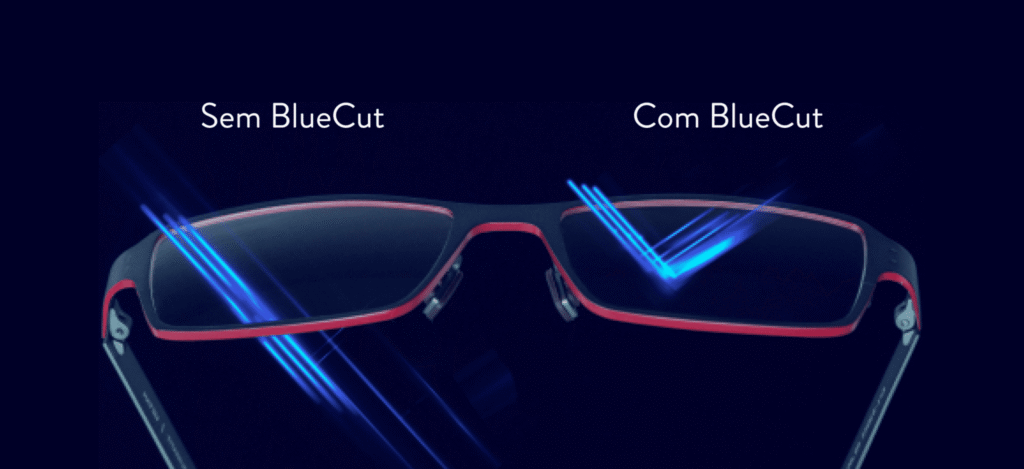
Blue light glasses have special lens coatings or lens materials designed to filter out a portion of the blue-violet light emitted by digital screens. The idea is that by reducing the amount of high-energy blue light reaching your eyes, you reduce strain and potentially improve sleep quality if you use screens in the evening.
Here’s what we tell our customers honestly:
What blue light glasses can help with:
- Reducing glare and visual discomfort during long screen sessions
- Potentially easing the transition to sleep if you use devices at night, since reduced blue light exposure may support your body’s natural melatonin production
- Providing a protective layer for people who already spend excessive hours on screens daily
What blue light glasses are not a substitute for:
- An accurate, updated prescription. If your core issue is uncorrected refractive error, a blue light coating alone won’t solve your eye strain.
- Good screen habits. No lens coating replaces proper posture, screen distance, or regular breaks.
- A cure for dry eyes caused by reduced blinking — that needs behavioural changes and, if needed, lubricating drops.
In short, blue light lenses work best as one part of a broader strategy, not a standalone miracle fix. At SPECS SHOP, we always start with a proper eye test to understand your actual visual needs before recommending any lens coating, because the right foundation matters more than any add-on feature.
Computer Glasses vs. Blue Light Glasses: What’s the Difference?
These terms are often used interchangeably, but they’re not always the same thing.
- Blue light glasses can be fitted with plain (non-prescription) lenses or prescription lenses, and their defining feature is the blue-light-filtering coating.
- Computer glasses typically refer to prescription eyewear specifically optimised for intermediate-distance vision — the distance between your eyes and your computer screen, which is different from the distance used for regular reading or distance glasses. These may or may not include blue light filtering as an added feature.
If you already wear prescription glasses but find yourself squinting, leaning forward, or removing your glasses to see your screen clearly, it might be worth discussing computer-specific lenses with your optician rather than just adding a blue light coating to your existing prescription.
How Often Should You Get Your Eyes Tested?
Many people wait until something feels noticeably wrong before booking an eye test — but by that point, some strain-related discomfort has often already built up. As a general guideline:
- Children and teenagers: once a year, especially given rising screen exposure through online classes
- Adults under 40 with no known issues: every one to two years
- Adults over 40: annually, as focusing ability naturally declines with age
- Anyone experiencing symptoms like headaches, blurred vision, or increased sensitivity to light should get tested sooner, regardless of when their last test was
A comprehensive eye test doesn’t just check whether you need glasses — it can also pick up early signs of other conditions that are worth catching early.
Practical Tips for Reducing Digital Eye Strain Starting Today
To wrap things up, here’s a simple checklist you can start applying immediately, no appointment required:
- Follow the 20-20-20 rule during long work or study sessions
- Adjust your screen brightness and contrast to match your surrounding lighting
- Keep your screen at arm’s length and slightly below eye level
- Blink consciously and more often while working on screens
- Use lubricating eye drops if your eyes feel dry by midday
- Take short breaks to look at something in the distance
- Get an eye test if it’s been more than a year, or if you’re experiencing any strain symptoms
- Ask about lens options suited specifically to your screen habits, rather than assuming one generic pair of glasses covers everything
Visit SPECS SHOP for a Personalised Solution
Digital eye strain isn’t something you have to just live with. Whether it turns out you need a fresh prescription, computer-specific lenses, a blue light coating, or simply a few habit changes, the right first step is a proper eye test with someone who can look at your actual day-to-day screen use and recommend what genuinely fits your needs.
At SPECS SHOP in Malleshwaram, Bangalore, we offer eye testing along with a full range of eyeglasses, sunglasses, and computer glasses designed for people who live a large part of their day in front of a screen. If you’ve been experiencing tired eyes, headaches, or blurry vision by the end of the day, don’t wait for it to get worse.
Book a free eye test with us today — call 8123434561 or visit our store in Malleshwaram.